Running a small business is demanding, and managing your finances effectively is the bedrock of sustainable growth. From daily bookkeeping habits to navigating complex payroll laws and preparing for tax season, staying organized can feel overwhelming. Many business owners find themselves bogged down by spreadsheets and receipt piles, unsure if they're making the right financial decisions or staying compliant. This common struggle can divert your focus from core business operations and strategic planning.
This guide cuts through the noise. We've compiled essential, actionable small business accounting tips that go beyond the basics, providing a clear roadmap to financial control. You will learn how to implement robust systems, leverage technology like QuickBooks Online for efficiency, and manage cash flow with precision. We will also cover critical compliance details, including specifics for businesses operating in Washington State, to ensure you meet your obligations confidently.
These strategies are not just about ticking boxes; they are designed to give you clarity, save you significant time, and empower you to build a financially resilient business. Whether you are a professional service firm managing retainers or a crypto investor navigating IRS rules, these insights will help you make informed decisions. Let's transform your accounting from a chore into a powerful strategic advantage that fuels your company's future success.
1. Tip #1: Automate and Streamline with Cloud Accounting Software
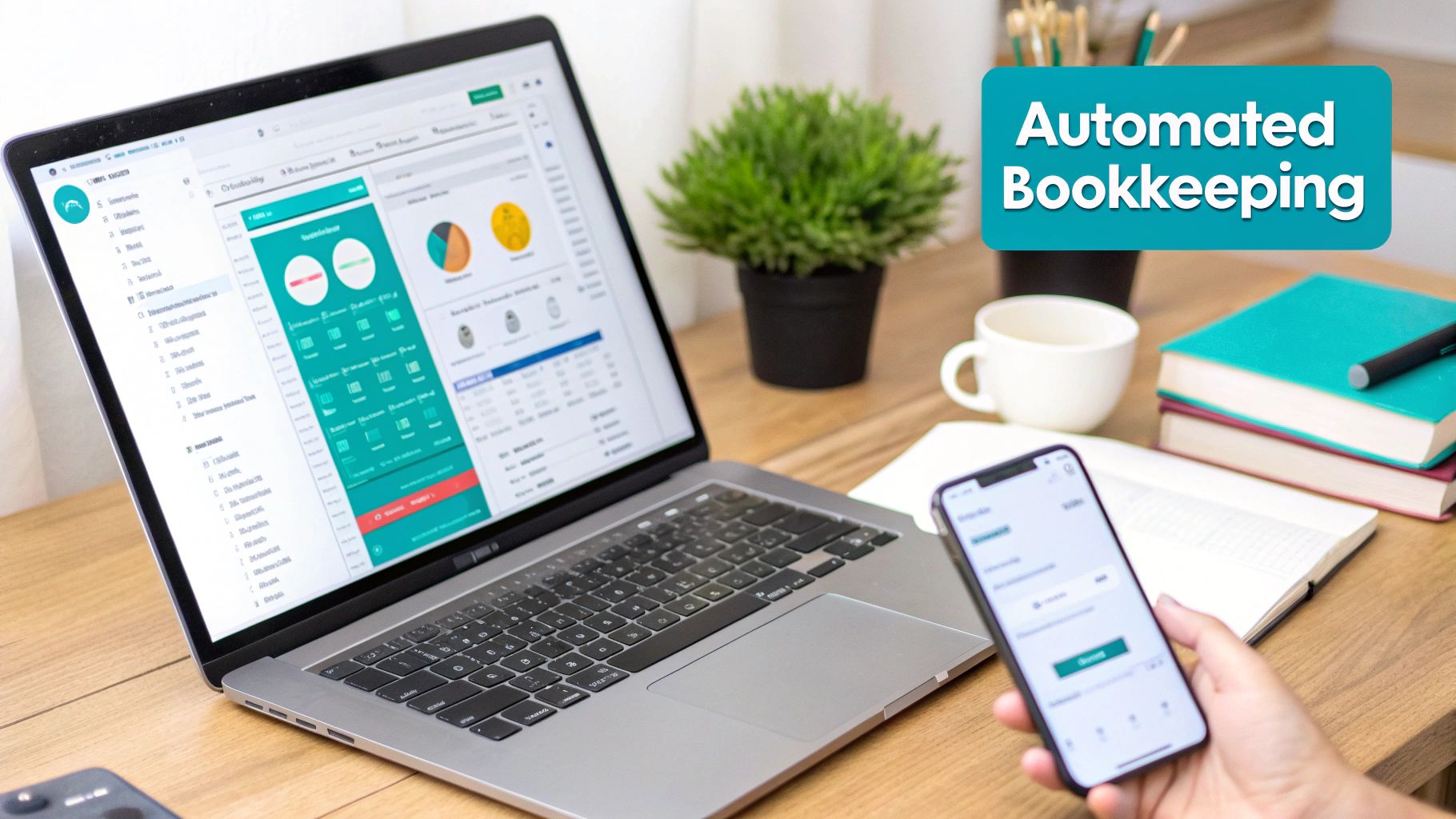
The single most impactful change a small business can make to its financial operations is moving away from manual spreadsheets and adopting cloud-based accounting software. Platforms like QuickBooks Online, Xero, or Wave are foundational tools that automate tedious tasks, such as transaction coding, invoicing, and bank reconciliations. This transition is one of the most essential small business accounting tips for achieving accuracy and efficiency.
By automating these processes, you drastically reduce the risk of human error and gain a real-time, accurate snapshot of your business's financial health. Instead of waiting for month-end reports, you can access your Profit & Loss statement or Balance Sheet instantly, empowering you to make data-driven decisions on the fly. This means less time bogged down in administrative work and more time focused on strategic growth.
Why It Works: Real-World Scenarios
- E-commerce Retailer: An online store uses QuickBooks Online to automatically sync sales data from its Shopify platform, keeping inventory levels and sales tax calculations constantly updated without manual entry.
- Marketing Agency: A digital marketing firm uses Xero to automatically generate and send recurring monthly invoices to retainer clients, ensuring consistent cash flow and eliminating missed billings.
- Freelance Consultant: A consultant uses FreshBooks to track billable hours, capture receipt photos for expenses, and send professional invoices directly from their mobile device, streamlining their entire financial workflow.
Actionable Steps for Implementation
To get the most out of your software, follow these best practices:
- Prioritize Integration: Choose a platform that connects seamlessly with your other essential tools, like your CRM, payroll system, and payment gateways (e.g., Stripe, PayPal), to create a single, unified financial ecosystem.
- Create Bank Rules: Invest time upfront to set up "bank rules" or "automation rules." This tells the software how to automatically categorize recurring transactions, such as categorizing all "Chevron" payments as "Automobile: Fuel," saving hours each month.
- Schedule a Weekly Review: Block 30-60 minutes on your calendar each week to review and categorize any transactions the software couldn't automatically handle. This prevents a massive, stressful cleanup at the end of the month or quarter. If you're looking for more ways to streamline these tasks, you can learn more about quick cloud bookkeeping hacks for Washington businesses.
2. Tip #2: Separate Business and Personal Finances
One of the most foundational yet frequently overlooked small business accounting tips is to draw a clear, unwavering line between your business and personal finances. This means opening a dedicated business checking account, savings account, and credit card exclusively for company-related transactions. Commingling funds, or mixing personal and business expenses, is a direct path to inaccurate records, immense tax-time stress, and potential legal vulnerabilities.
Establishing separate accounts is not just an organizational best practice; it's a critical step in professionalizing your operations and protecting your personal assets. When your business is its own financial entity, you gain a crystal-clear view of its profitability and cash flow. It simplifies bookkeeping, makes tax deductions easier to substantiate, and is essential for maintaining the corporate veil that shields you from personal liability if you operate as an LLC or corporation.
Why It Works: Real-World Scenarios
- Solo Entrepreneur: A freelance graphic designer opens a business checking account as soon as they register their sole proprietorship. They use it to receive all client payments and pay for all business expenses, like software subscriptions and stock photos, making it simple to calculate their quarterly estimated taxes.
- LLC Owner: The owner of a small construction company uses a dedicated business credit card for all material purchases and fuel. This maintains the legal liability protection of their LLC and simplifies job costing, as every project-related expense is clearly itemized on one statement.
- Retail Store Owner: A boutique owner uses their business account to pay vendors, process payroll, and manage rent. When they need to pay themselves, they execute a formal "owner's draw," transferring a set amount to their personal account and creating a clean, trackable record for their bookkeeper.
Actionable Steps for Implementation
To properly separate your finances, follow these crucial steps:
- Open Accounts Immediately: Open your business bank accounts before you make your first sale or incur your first expense. This ensures a clean financial history from day one.
- Use the Business Name: Ensure all accounts are officially registered under your legal business name, not your personal name. This reinforces the legitimacy of your business entity.
- Establish a Process for Paying Yourself: Never pay for personal items directly from the business account. Instead, establish a regular, documented process for paying yourself, such as a formal payroll or an owner's draw transfer to your personal account.
- Document All Capital Contributions: If you use personal funds to start or fund the business, document this as a "capital contribution" or a formal loan to the company. This keeps the accounting clean and clarifies the nature of the transaction.
3. Tip #3: Track Expenses in Real-Time
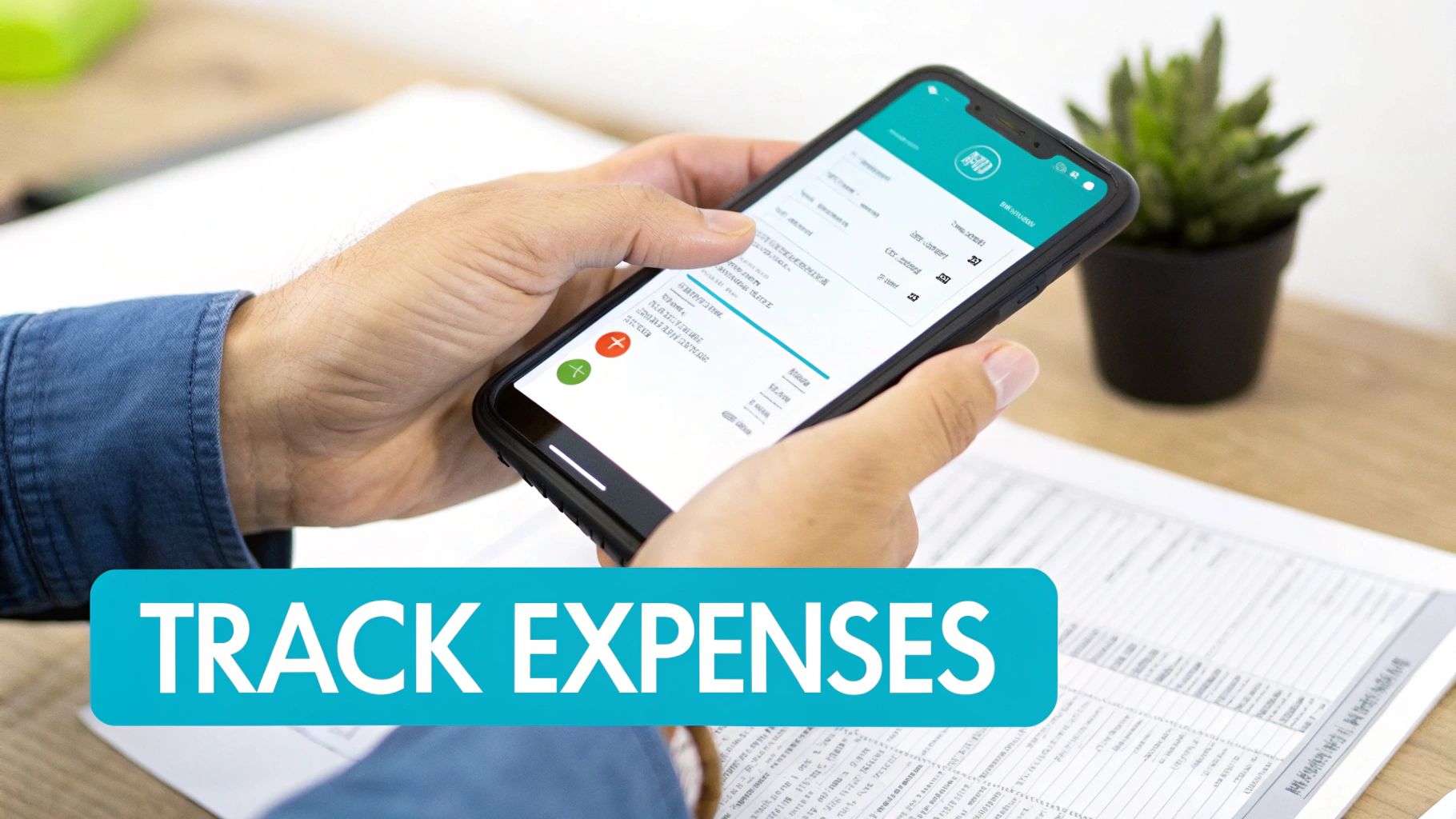
Waiting until the end of the month to sift through a shoebox full of receipts is a recipe for missed deductions and inaccurate financial reporting. One of the most critical small business accounting tips is to track your business expenses immediately as they occur. This practice ensures every deductible expense is captured, provides a constantly current view of your cash flow, and transforms a dreaded month-end task into a simple, manageable daily habit.
This real-time approach eliminates guesswork and prevents the loss of valuable tax write-offs from faded or misplaced receipts. By capturing expenses on the go, you empower your business with up-to-the-minute financial data, allowing for smarter, more agile spending decisions instead of operating on outdated information.
Why It Works: Real-World Scenarios
- Restaurant Owner: The owner snaps photos of daily invoices from food and supply vendors, instantly logging costs of goods sold. This allows them to monitor food cost percentages daily and adjust menu pricing proactively.
- Consulting Firm: A consultant uses an expense tracking app to log mileage, client lunches, and hotel stays while traveling. These expenses are immediately categorized and linked to the specific project, ensuring accurate client billing and job costing.
- Retail Business: A boutique owner uses their phone to capture receipts for inventory purchases, shipping supplies, and marketing materials as soon as they are paid, keeping their expense accounts perfectly current.
Actionable Steps for Implementation
To build an effective real-time expense tracking system, follow these steps:
- Use Mobile Apps: Leverage dedicated apps like Expensify, Zoho Expense, or the mobile app for your accounting software (QuickBooks, Xero). These tools allow you to photograph receipts, automatically pull key data, and categorize expenses in seconds.
- Establish a Categorization System: Create and stick to a consistent chart of accounts for categorizing expenses. This ensures that "office supplies" or "client entertainment" are always coded correctly, making financial analysis clean and simple.
- Implement a "Snap and Sync" Rule: Make it a non-negotiable habit for you and your team to photograph every single business receipt at the point of purchase. The modern tools available with cloud bookkeeping make this process nearly effortless.
- Schedule a Weekly Review: Dedicate 15-20 minutes each week to review the expenses logged through your app. This allows you to catch any miscategorizations and ensure everything is synced correctly with your primary accounting software, preventing a larger cleanup later.
4. Tip #4: Create a Monthly Financial Review Schedule
Reactive accounting, where you only look at your books at tax time, is a recipe for missed opportunities and costly mistakes. One of the most strategic small business accounting tips is to establish a non-negotiable monthly financial review. This dedicated time is for analyzing your financial statements, reconciling all accounts, and identifying key performance trends before they become major issues.
This proactive routine transforms your financial data from a historical record into a forward-looking management tool. By consistently reviewing reports like your Profit & Loss, Balance Sheet, and Statement of Cash Flows, you can spot rising expenses, identify your most profitable services, and make informed decisions about budgeting, hiring, and investment. It shifts your focus from merely recording transactions to strategically interpreting them.
Why It Works: Real-World Scenarios
- Manufacturing Business: A small manufacturer reviews its cost of goods sold monthly, noticing a gradual increase in raw material costs. This early detection allows them to renegotiate with suppliers or adjust product pricing before profit margins are significantly eroded.
- Service-Based Firm: A consulting agency analyzes its profit margins per client each month. They discover one large retainer client is consistently unprofitable due to excessive scope creep, prompting a discussion to restructure the contract.
- Retail Store: An e-commerce shop owner compares monthly sales trends against marketing spend. They see that a recent social media ad campaign resulted in a high return on investment, guiding them to double down on that channel for the next month.
Actionable Steps for Implementation
To build an effective monthly review habit, follow these steps:
- Schedule It Firmly: Block 2-4 hours on your calendar on the same day each month, such as the second Friday. Treat this appointment with the same importance as a major client meeting to ensure it doesn't get pushed aside.
- Create a Review Checklist: Develop a standardized checklist to guide your review. It should include tasks like: reconciling all bank and credit card accounts, reviewing accounts receivable aging, comparing actuals vs. budget, and analyzing key expense categories.
- Use Variance Analysis: Don't just look at the numbers; analyze them. Compare the current month’s performance to the previous month and the same month last year. Ask "why" for any significant discrepancies to uncover the story behind the data.
- Document Action Items: Conclude every review session by documenting clear, actionable takeaways. This could be anything from "Investigate high utility bill" to "Follow up with Client X on overdue invoice" to ensure your insights lead to tangible improvements.
5. Master Invoicing and Payment Collection
Slow-paying clients are a direct threat to your cash flow, and a disorganized invoicing process is often the primary cause. Mastering your invoicing and collections strategy is one of the most critical small business accounting tips for maintaining a healthy bank balance. This involves creating a systematic, professional, and consistent approach to billing clients and following up on outstanding payments to reduce your days sales outstanding (DSO) and accelerate revenue collection.
A robust invoicing system moves beyond simply sending a bill; it establishes clear expectations, automates reminders, and makes it as easy as possible for clients to pay you. By implementing a defined process using tools like QuickBooks Online or FreshBooks, you professionalize your accounts receivable and ensure that cash isn't left sitting in your clients' bank accounts when it should be funding your business operations.

Why It Works: Real-World Scenarios
- Consulting Firm: A Seattle-based firm uses QuickBooks Online to send invoices with clear Net-30 payment terms and has automated reminders scheduled for 3 days before and 7 days after the due date, significantly reducing late payments.
- B2B Manufacturer: A manufacturer in Tacoma offers a 2% discount for invoices paid within 10 days (2/10 Net 60), incentivizing early payments and improving their cash conversion cycle.
- Freelance Designer: A freelance graphic designer sends invoices via Stripe immediately upon project completion, allowing clients to pay instantly with a credit card, which drastically cuts down payment waiting times compared to mailing checks.
Actionable Steps for Implementation
To tighten up your invoicing and get paid faster, implement these best practices:
- Invoice Immediately: Don't wait until the end of the month. Send your invoice as soon as the service is rendered or the product is delivered, while the value is still fresh in the client's mind.
- Clearly State Terms: Ensure your payment terms (e.g., "Due on Receipt," "Net-15," "Net-30") are prominently displayed on every invoice. Include late payment penalties in your initial service agreement to set expectations early.
- Offer Multiple Payment Options: Make it easy for clients to pay you. Accept ACH transfers, credit cards, and online payments through platforms like Stripe or PayPal. The fewer barriers to payment, the faster you'll get paid.
- Automate Follow-Ups: Use your accounting software to schedule automatic email reminders for upcoming and overdue invoices. A polite, automated nudge is often all that's needed to prompt payment.
6. Implement Quarterly Tax Estimated Payments
One of the most common and costly financial shocks for new entrepreneurs is receiving a massive, unexpected tax bill at the end of the year. To avoid this, it's critical to implement a system for paying quarterly estimated taxes. Unlike W-2 employees who have taxes withheld automatically, self-employed individuals and pass-through entities (like S-Corps and LLCs) are required to pay income and self-employment taxes throughout the year.
Making these regular payments ensures you meet your tax obligations, prevents a huge financial strain during tax season, and helps you avoid underpayment penalties from the IRS. This proactive approach is one of the most vital small business accounting tips for maintaining healthy cash flow and staying compliant. By treating tax payments as a regular, manageable operating expense, you build financial discipline directly into your business model.
Why It Works: Real-World Scenarios
- Freelance Graphic Designer: A designer with fluctuating monthly income calculates their net earnings each quarter and uses Form 1040-ES to pay federal and state estimated taxes, ensuring their tax burden aligns with their actual cash flow.
- S-Corp Owner: The owner of a consulting firm receives a salary and shareholder distributions. They work with their CPA to calculate and pay quarterly estimated taxes based on their total combined income, avoiding any year-end surprises.
- Rental Property Owner: An investor who owns several rental properties calculates their net rental income each quarter after expenses and makes estimated payments to cover the taxes on those profits.
Actionable Steps for Implementation
To build a reliable estimated tax payment system, follow these best practices:
- Set Aside Funds Systematically: Create a separate business savings account specifically for taxes. Automatically transfer 25-35% of every payment you receive into this account. This ensures the cash is available when it's time to make your quarterly payment.
- Use the IRS Safe Harbor Rule: To avoid underpayment penalties, you generally need to pay either 90% of the tax you owe for the current year or 100% of the tax you paid for the prior year (110% if your adjusted gross income is over $150,000). The prior-year method is often simpler for businesses with stable income.
- Leverage Online Payment Portals: Don't rely on mailing checks. Use the IRS Direct Pay or the Electronic Federal Tax Payment System (EFTPS) to make secure, on-time payments. Be sure to keep a record of the confirmation for each payment.
- Schedule Your Payments: Mark the estimated tax due dates on your calendar: April 15, June 15, September 15, and January 15 of the following year. Setting calendar reminders a week in advance gives you time to calculate and submit your payment without rushing.
7. Maintain Organized Receipts and Documentation
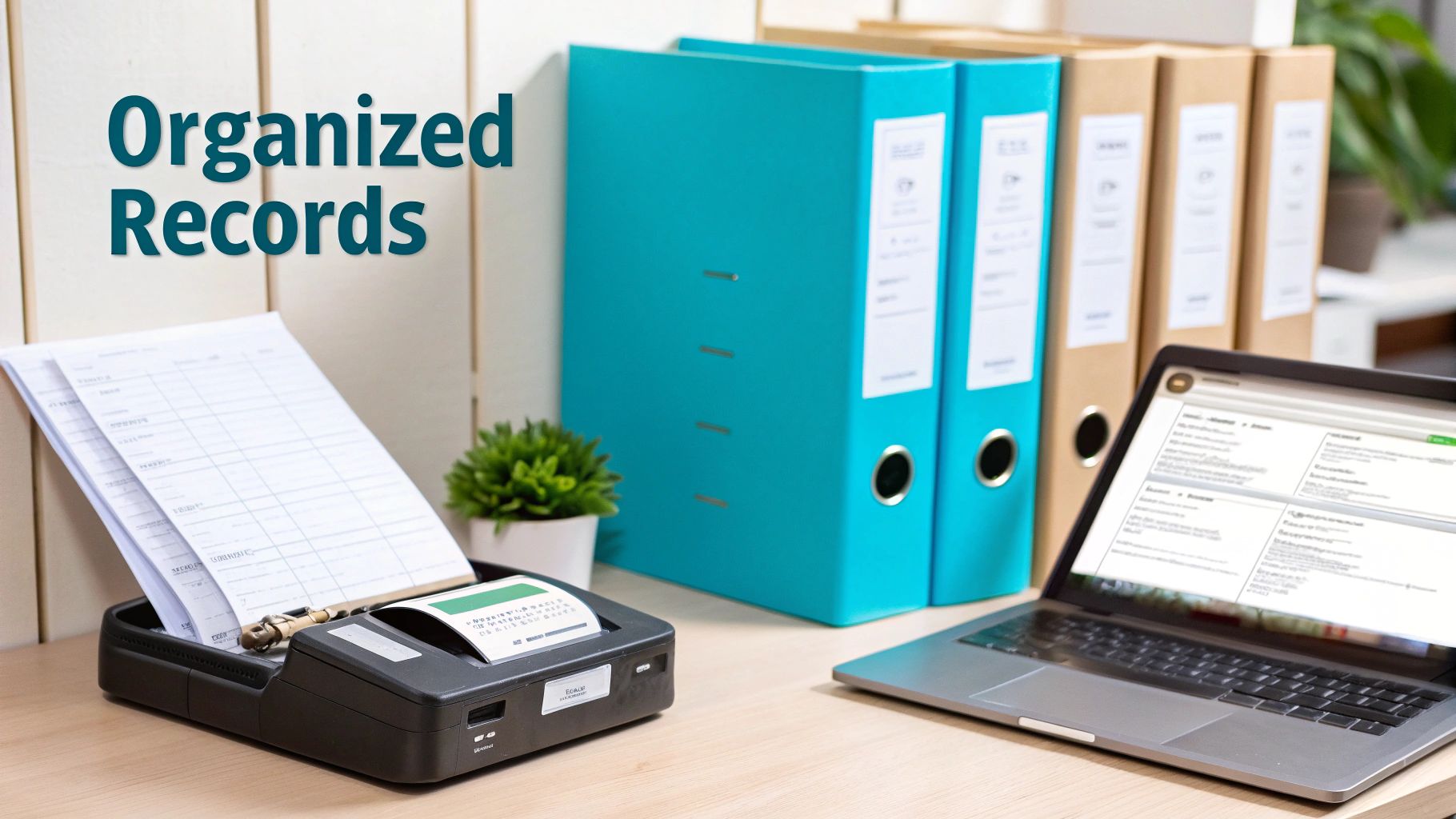
A systematic approach to storing and organizing financial documents is non-negotiable for any serious business. The IRS requires businesses to maintain records for at least three to seven years to substantiate deductions and income reported on tax returns. Proper documentation is your best defense in an audit and a cornerstone of accurate bookkeeping, making it one of the most critical small business accounting tips to implement.
Effective record-keeping moves beyond stuffing a shoebox with receipts. It involves creating a reliable, easy-to-navigate system for all financial paperwork, including receipts, bank statements, invoices, contracts, and payroll records. This discipline not only ensures compliance but also provides a clear audit trail that supports your financial statements and simplifies tax preparation.
Why It Works: Real-World Scenarios
- Construction Company: A contractor digitally scans and files receipts for all equipment purchases and materials. When a high-value tool breaks under warranty, they can instantly locate the proof of purchase and date to file a claim, saving thousands.
- Service Business: A marketing agency maintains digital copies of all client contracts and Statements of Work (SOWs). During a dispute over project scope, they quickly reference the signed SOW, clarifying deliverables and avoiding costly conflicts.
- Consulting Firm: A consultant uses an app to photograph and document every receipt related to billable project expenses. This ensures 100% of reimbursable costs are captured and accurately invoiced to the client, protecting their profit margins.
Actionable Steps for Implementation
To build a robust and audit-proof documentation system, follow these steps:
- Go Digital Immediately: Use a scanner or a mobile app like Dext, Expensify, or the QuickBooks Online app to capture a digital image of every receipt the moment you get it. This prevents loss and fading.
- Establish a Clear Folder Structure: Create a logical digital filing system. A common and effective method is
Year > Month > Vendor/Category(e.g.,2024 > 10-October > Office Supplies). - Back Up Everything: Redundancy is key. Store your digital files in at least two locations, such as a cloud service (Google Drive, Dropbox) and a physical external hard drive, to protect against data loss.
- Label Files Descriptively: Name your scanned files with key information for easy searching, such as
YYYY-MM-DD_Vendor_Amount(e.g.,2024-10-28_HomeDepot_174.50.pdf).
8. Tip #8: Track and Manage Accounts Receivable (A/R)
Cash flow is the lifeblood of any small business, and uncollected invoices are a direct threat to its health. Actively tracking and managing your Accounts Receivable (A/R) means implementing a systematic process to monitor money owed by customers. This goes beyond just sending an invoice; it involves establishing credit policies, performing aging analysis, and having a clear collections procedure to minimize bad debt and accelerate cash collection. This is one of the most critical small business accounting tips for maintaining financial stability.
By creating a disciplined A/R management system, you transform your outstanding invoices from a passive waiting game into an active part of your financial strategy. An A/R aging report, which categorizes invoices by how long they’ve been outstanding (e.g., 0-30 days, 31-60 days), becomes a powerful tool. It allows you to identify potential problems early and prioritize collection efforts before an invoice becomes a write-off, ensuring the revenue you've earned actually makes it into your bank account.
Why It Works: Real-World Scenarios
- B2B Consulting Firm: A business consultant uses their accounting software's A/R aging report to see that a major client is consistently paying at 45 days instead of the agreed-upon Net 30. This prompts a conversation to clarify terms and improve payment speed.
- Manufacturing Company: A manufacturer establishes a clear credit policy, requiring upfront deposits from new distributors and setting credit limits for established partners, reducing the risk of large-scale defaults.
- SaaS Company: A software-as-a-service business uses automated reminders for failed monthly subscription payments, immediately alerting customers to update their credit card information and minimizing service interruptions and revenue loss.
Actionable Steps for Implementation
To build a robust A/R management process, implement these key steps:
- Establish Clear Policies Upfront: Define your payment terms (e.g., Net 15, Net 30), accepted payment methods, and late fee policies in your contracts and on every invoice. Clear communication prevents misunderstandings later.
- Utilize A/R Aging Reports: Schedule time weekly or bi-weekly to review your A/R aging report. Focus your attention on the accounts that are 30, 60, and 90+ days past due and initiate a follow-up sequence.
- Create a Follow-Up Cadence: Develop a systematic plan for collections. For example, send a polite email reminder at 15 days past due, make a phone call at 30 days, and send a formal letter at 60 days. This consistency shows you are serious about collections. If this process becomes too time-consuming, professional bookkeeping services can manage A/R for you.
9. Implement Internal Accounting Controls
While often associated with large corporations, establishing internal accounting controls is a crucial practice for any small business serious about protecting its assets. These controls are essentially a system of checks and balances designed to prevent fraud, catch errors, and ensure the accuracy of your financial data. Implementing these policies is one of the most proactive small business accounting tips for safeguarding your company’s financial integrity.
By creating clear procedures and separating key financial duties, you build a framework that minimizes opportunities for mismanagement, whether intentional or accidental. This system not only protects your cash and assets but also builds trust with investors, lenders, and stakeholders by demonstrating responsible financial stewardship. It's about creating an environment where accuracy is the standard and accountability is clear.
Why It Works: Real-World Scenarios
- Construction Company: A contractor requires that project managers approve all material purchase orders, but a separate person in the back office is responsible for processing the payment to the vendor. This prevents a single individual from ordering and paying for unauthorized items.
- Retail Boutique: The owner requires dual signatures for any check over $500 and performs surprise cash counts of the register to ensure daily sales match the deposits.
- Non-Profit Organization: The organization establishes a policy where the person who receives and logs incoming donations is different from the person who deposits the funds and reconciles the bank account.
Actionable Steps for Implementation
To build a strong control environment, start with these fundamental steps:
- Segregate Financial Duties: The core principle of internal controls. Ensure the person who approves expenses is not the same person who makes the payments. Likewise, the person who sends invoices should not be the one who processes customer payments.
- Create a Written Policies Manual: Document your financial procedures clearly. Outline who is responsible for what, approval hierarchies for spending, and the process for handling cash and other assets. This removes ambiguity and provides a standard for everyone to follow.
- Limit Access to Systems: Restrict access to your accounting software and bank accounts to only those who absolutely need it for their roles. Use different user permission levels in QuickBooks Online to ensure employees can only view or edit what is necessary for their job.
10. Plan for Tax Deductions and Tax Strategy
Effective tax management goes far beyond simply filing on time; it involves a proactive, year-round strategy to legally minimize your tax liability. For a small business, this means actively identifying, tracking, and maximizing every available deduction while making strategic decisions about entity structure, retirement contributions, and the timing of major expenses. A well-planned tax strategy is one of the most critical small business accounting tips for preserving cash flow and maximizing profitability.
By shifting from a reactive, year-end scramble to a proactive, quarterly review, you transform taxes from a dreaded liability into a strategic tool. This approach allows you to make informed financial decisions that directly impact your bottom line, ensuring you don't overpay the IRS and instead reinvest those savings back into your business's growth.
Why It Works: Real-World Scenarios
- Growing Consultancy: A marketing consultant, structured as a sole proprietor, converts to an S-Corp after a high-earning year. This move saves them over 15% on self-employment taxes by allowing them to take a reasonable salary and the rest as a distribution.
- Freelance Designer: A freelance graphic designer meticulously tracks all expenses for their dedicated home office, including a percentage of utilities, insurance, and repairs. This results in a home office deduction that saves them over $1,500 annually on their tax bill.
- Retail Business: An e-commerce retailer plans to purchase new inventory management equipment. They strategically time the purchase for December of a high-income year to take advantage of Section 179 depreciation, significantly reducing their taxable income for that year.
Actionable Steps for Implementation
To build a robust tax strategy, integrate these practices into your financial calendar:
- Partner with a CPA Early: Don't wait until tax season. Engage with a tax professional in the first quarter to map out a strategy for the entire year, reviewing your business structure and identifying key deduction opportunities.
- Track Deductions Continuously: Use your accounting software to tag and categorize potential tax-deductible expenses as they occur. Create specific categories for things like business meals, travel, software subscriptions, and professional development to simplify year-end reporting.
- Evaluate Retirement Plans: Explore retirement options like a SEP-IRA or Solo 401(k). These plans allow for significant tax-deductible contributions (up to $69,000 for 2024 for a SEP-IRA), reducing your current taxable income while building wealth for the future.
- Conduct Quarterly Tax Reviews: Schedule a meeting with your bookkeeper or CPA each quarter to review your financial statements, project your annual tax liability, and make any necessary estimated tax payments to avoid underpayment penalties.
10-Point Small Business Accounting Tips Comparison
| Item | Implementation Complexity 🔄 | Resource Requirements ⚡ | Expected Outcomes ⭐📊 | Ideal Use Cases 💡 | Key Advantages |
|---|---|---|---|---|---|
| Implement Automated Bookkeeping Software | 🔄 Medium — 1–2 week setup; user training required | ⚡ Subscription ($25–$300+/mo), internet, integrations, staff training | ⭐⭐⭐⭐ — Reduces errors 80–90%; saves ~10–15 hrs/week; real-time reports 📊 | E‑commerce, service firms, freelancers scaling operations | Automates reconciliation and reporting; scalable; real-time visibility |
| Separate Business and Personal Finances | 🔄 Low — open accounts and establish habits | ⚡ Bank fees, EIN/docs, initial setup time | ⭐⭐⭐⭐ — Simplifies taxes; reduces audit risk; clearer P/L 📊 | All small businesses, LLCs, sole proprietors | Legal liability protection; cleaner accounting; improved credibility |
| Track Expenses in Real-Time | 🔄 Medium — requires discipline and ongoing capture | ⚡ Mobile app/subscriptions, time to capture receipts, storage | ⭐⭐⭐⭐ — Maximizes deductions; accurate monthly P/L; faster insights 📊 | Restaurants, consultants, retail, travel-heavy businesses | Captures all deductible expenses; timely cash‑flow insights; easier year‑end |
| Create a Monthly Financial Review Schedule | 🔄 Low–Medium — routine and basic accounting skills needed | ⚡ 4–6 hrs/month, access to statements and reporting tools | ⭐⭐⭐⭐ — Early problem detection; better cash‑flow decisions 📊 | Any business needing oversight; manufacturing, retail, services | Catches errors early; informs decisions; reduces year‑end surprises |
| Master Invoicing and Payment Collection | 🔄 Medium — policy setup and automation configuration | ⚡ Invoicing/payment software, payment processors, staff time | ⭐⭐⭐⭐ — Improves cash flow 20–40%; reduces DSO 📊 | Consultants, freelancers, B2B vendors, SaaS | Faster payments; professional invoices; automated reminders and follow‑up |
| Implement Quarterly Tax Estimated Payments | 🔄 Medium–High — requires forecasting and regular calculations | ⚡ Time/CPA help, set‑aside cash (≈25–30% of profits), tax software | ⭐⭐⭐ — Avoids large year‑end bills and penalties; smoother budgeting 📊 | Self‑employed, S‑Corp owners, sole proprietors, pass‑through entities | Predictable tax burden; penalty avoidance; improved cash planning |
| Maintain Organized Receipts and Documentation | 🔄 Medium — initial setup then ongoing discipline | ⚡ Scanning apps/cloud storage, backup systems, time for filing | ⭐⭐⭐⭐ — Ensures audit readiness; simplifies tax prep 📊 | Construction, retail, service firms, any audit‑risk business | Audit compliance; faster tax prep; reduced lost/duplicate documents |
| Track and Manage Accounts Receivable (A/R) | 🔄 Medium — policy creation and regular monitoring | ⚡ A/R software, staff for collections, credit checks | ⭐⭐⭐⭐ — Reduces bad debt 15–25%; improves cash forecasting 📊 | B2B firms, manufacturers, professional services, SaaS | Lower bad debt; better cash visibility; proactive collections |
| Implement Internal Accounting Controls | 🔄 High — policy design, segregation of duties, ongoing audits | ⚡ Staff, training, documentation, monitoring systems | ⭐⭐⭐⭐ — Prevents fraud; improves accuracy and asset protection 📊 | Businesses handling cash/transactions, retail, nonprofits, larger teams | Fraud prevention; strengthened financial controls; stakeholder confidence |
| Plan for Tax Deductions and Tax Strategy | 🔄 High — ongoing strategy, quarterly reviews, professional input | ⚡ CPA fees ($1,500–$5,000+), time, detailed recordkeeping | ⭐⭐⭐⭐ — Reduces tax liability 15–30%; improves long‑term planning 📊 | Higher‑income small businesses, S‑Corp candidates, growth‑oriented firms | Tax savings, entity optimization, retirement and timing strategies |
From Tips to Transformation: Taking Control of Your Financial Future
We've explored ten foundational small business accounting tips that serve as the bedrock for financial stability and growth. From the non-negotiable step of separating business and personal finances to the strategic implementation of quarterly estimated tax payments and diligent expense tracking, each piece of advice is a building block. Mastering invoicing, maintaining organized documentation, and implementing internal controls are not just administrative tasks; they are powerful levers for managing cash flow and protecting your assets.
This journey through financial best practices is designed to shift your perspective. Accounting should not be a reactive, year-end scramble filled with stress and uncertainty. Instead, it should be an active, integrated part of your daily operations that provides real-time clarity. When you know your numbers, you can make informed decisions with confidence. You can see trends, identify opportunities, and mitigate risks before they become significant problems. The goal is to transform your financial data from a historical record into a forward-looking strategic tool.
From Good Habits to Great Decisions
The true value of these tips emerges when they become ingrained habits. A monthly financial review isn't just a meeting with your books; it's your opportunity to ask critical questions. Are your profit margins where they need to be? Is a particular service line underperforming? Do you have enough cash runway to invest in a new piece of equipment or hire a key employee?
Consistently tracking your accounts receivable (A/R) allows you to address late payments proactively, preserving vital cash flow. Similarly, planning for tax deductions throughout the year, rather than just in the frantic weeks before a deadline, can lead to substantial savings and a much more predictable tax liability. Each tip builds upon the others, creating a cohesive system that supports your business's health and resilience.
The Power of Proactive Systems
Ultimately, these practices are about building a system. A system for capturing every expense. A system for issuing and following up on invoices. A system for reviewing your financial position and making adjustments. When you have robust systems in place, you minimize errors, reduce mental overhead, and free up your time to focus on what you do best: serving your clients and growing your business.
This systematic approach empowers you to:
- Forecast with Accuracy: Understand your revenue cycles and expense patterns to predict future cash flow.
- Optimize Profitability: Identify your most and least profitable offerings through detailed tracking and analysis.
- Ensure Compliance: Stay ahead of tax deadlines and regulatory requirements, particularly complex local ones in Washington State.
- Secure Funding: Present clean, professional financial statements to lenders or investors when opportunities arise.
But you don't have to build this system alone. While implementing these small business accounting tips is a significant step forward, partnering with a professional can accelerate your progress and unlock a deeper level of strategic insight. For established businesses in Washington, especially those navigating the complexities of professional services, retail inventory, or crypto investments, expert guidance is not a cost; it's a high-return investment in your future. A dedicated firm can handle the intricate details, ensuring everything from payroll compliance to tax preparation is executed flawlessly, giving you the ultimate peace of mind.
Ready to transform your financial management from a source of stress into your greatest strategic asset? The team at Bugaboo Bookkeeping specializes in implementing these very systems for Washington State businesses, providing the clarity and control you need to thrive. Schedule your free consultation today at Bugaboo Bookkeeping to discover how professional support can put your business on a solid path to sustainable growth.
Article created using Outrank